Yes, car window tint can be installed in winter when the shop has suitable working conditions and follows the film's installation requirements. The outdoor temperature isn't the whole story. What matters is how the glass is prepared, how the film is installed and what you do while it cures. Ask about the shop's winter process before booking.
If you're considering winter window tint in Toronto, plan for three things:
- Installation conditions: Confirm that the shop can carry out the job properly during cold weather.
- Aftercare: Be prepared to leave the windows up and allow extra drying time if instructed.
- Film and shade: Choose for comfort and visibility year-round, not just for summer heat.
Can you tint car windows in cold weather?
Cold weather doesn't automatically rule out window tinting. Film is applied to clean glass using a controlled installation process, and the installer needs conditions that let the product be handled and fitted correctly. This is different from trying to apply film outdoors in a freezing driveway.
The right question isn't “Is January too cold?” It's “What does this shop do differently when the weather is cold?” Ask whether your appointment will take place in a suitable indoor work area, whether the vehicle needs time to acclimatize, and whether the chosen film has any weather-specific limits.
Those details should come from the shop doing the work, not a generic claim that every installer follows the same process.
UV protection still matters when the weather turns cold
Toronto's UV levels are generally lower in winter than in summer. That doesn't mean sunlight stops containing ultraviolet radiation. Health Canada notes that UV intensity peaks in spring and summer but can still affect skin and eyes in colder months, especially with reflection from snow. Environment and Climate Change Canada's UV guidance also explains why bright snowy conditions deserve attention even when the UV Index is low.
Not all vehicle glass offers the same UVA protection. A 2025 study in Archives of Dermatological Research measured UV transmission in 34 gas, hybrid and electric vehicles at US dealerships. Windshields blocked an average 99.25% of UVA, compared with 88.78% at the driver's-side window. That is a meaningful difference in this small sample; it is not a measurement of every vehicle in Canada, nor a test of the performance of a particular tint installation.
Different glass types offer different protection; film performance also varies by product.
For instance, SunTek's automotive film specifications list over 99% UV protection for the Evolve series over the manufacturer's stated 300–380 nm test range. That's a specific manufacturer measurement, not proof that every tint or every vehicle blocks the entire UV spectrum equally.
Window film does not replace ordinary sun-safety measures.
What window tint can do in a Toronto winter
Reduce distracting brightness and glare
Winter sunlight and snow glare can be distracting. Window film can reduce visible light transmission, but effectiveness depends on the film and shade.
There is an important trade-off: darker glass also reduces the light you see through it. Toronto drivers spend a lot of winter time commuting before sunrise or after sunset. A responsible tint choice considers night visibility as well as daytime comfort.
Add privacy without pretending a car is invisible
Appropriate tint may make it harder to see into certain windows, particularly in bright conditions, but privacy depends on lighting, viewing angle and the chosen shade. It isn't a security system, and it doesn't make valuables safe if they're visible from another angle. Avoid leaving bags and electronics on display.
Help protect the interior over time
Sunlight can contribute to fading and wear on upholstery, dashboards and trim. Choosing a film with documented UV performance can help reduce exposure through treated glass. That's a long-term reason to consider tint, not a promise that one installation will reverse existing fading.
Keep summer comfort in mind
Ceramic options are often chosen for solar-heat performance. A high infrared rejection figure is not the same as rejecting that share of all solar heat. Film specifications list infrared rejection and total solar energy rejection separately, so ask which measurement applies to the film being quoted.
In winter, tint's clearer benefits are UV management, glare, privacy and interior protection, not guaranteed faster cabin heating.
Winter tint aftercare: what changes in the cold?
The adhesive and moisture left from installation need time to settle. That can be slower in cool, wet conditions. Film manufacturer Gila's aftercare guidance notes that dry, sunny weather speeds curing while cold, wet weather can prolong it; early haze or cloudiness may occur during that process. Gila's instructions are not a substitute for TintGTA's aftercare instructions for the SunTek film actually installed.
Before driving away, ask the installer to put these instructions in writing:
- When can I roll down the side windows? Follow the wait time given for your film and conditions, rather than an online one-size-fits-all number.
- When can I clean the inside of the glass? Ask which cleaners and cloths are acceptable, and avoid scraping or scrubbing the fresh film.
- What appearance is normal during curing? Temporary moisture haze can be different from persistent lifting, peeling or contamination. If something looks wrong, contact the installer rather than pressing on the film.
- When should I follow up? Ask when the shop wants to review any bubbles, edges or cloudiness that remain after the expected drying period.
Ontario window tint rules: the short version
Ontario's Highway Traffic Act, section 73, prohibits coatings that obstruct the driver's view and certain coloured or reflective materials that substantially obscure the vehicle's interior through the windshield or windows immediately beside the driver. The province's passenger/light-duty inspection standard also specifies a minimum 70% light transmission for windows directly to the driver's left and right on vehicles manufactured January 1, 2017 or later when undergoing that inspection.
A film labelled “70%” does not guarantee that the finished window meets the threshold: the original glass and film work together. Have the actual vehicle and current requirements checked. No film shade is automatically legal on every Ontario vehicle.
Tint options at TintGTA
TintGTA lists Value, Carbon and Nano Ceramic films as its three main tiers. The right choice comes down to your budget, desired appearance, warranty terms and the product's documented performance, not simply selecting the darkest shade.
Installed prices depend on the vehicle, number of windows, existing film removal and selected film. Ask which warranty applies to the exact product, because TintGTA's published terms vary by tier and by promotion. See car window tinting in Scarborough and current tint offers for details.
Book your winter tint in Scarborough
Cold weather alone is not a reason to assume you must wait until spring. Ask about installation conditions and aftercare.
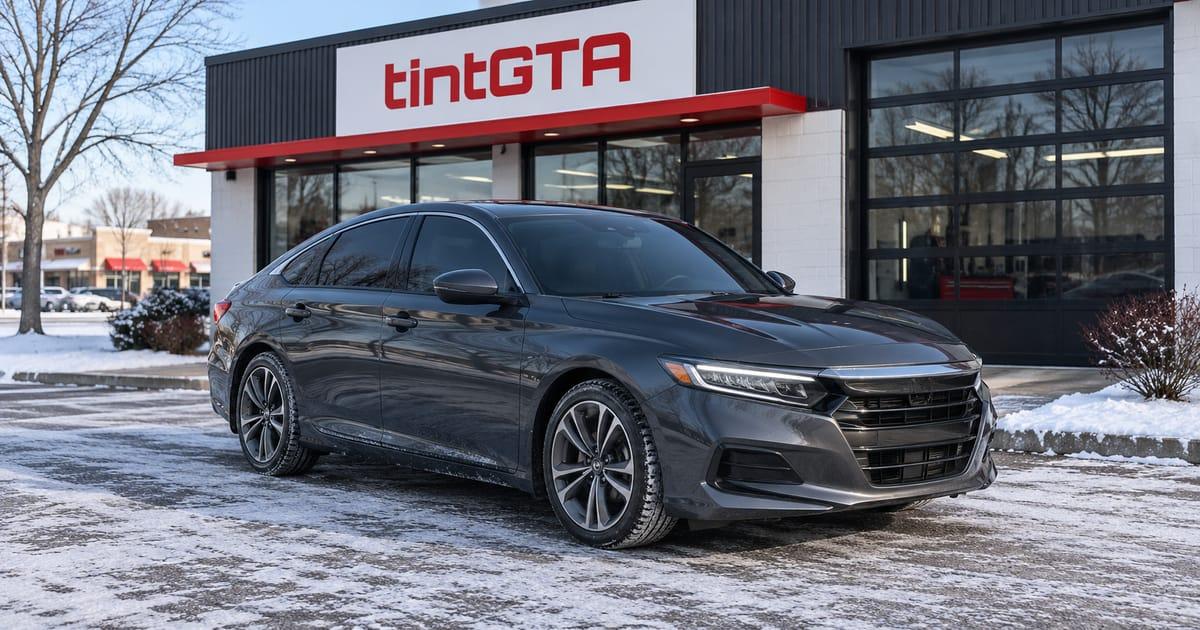
Visit TintGTA, 1213 Kennedy Rd, Scarborough, ON M1P 2L2, or call (416) 285-8468. Listed hours are Monday–Friday 10 a.m.–7 p.m. and Saturday 10 a.m.–5 p.m. You can also request a window tint quote. Share your vehicle, which windows you want tinted and whether glare, privacy or solar performance matters most.